


In the high-stakes world of professional football, a single goal can be more than just three points on the scoreboard. It can ignite a stadium, define a young career, and, as one Italian Serie A sensation recently proved, inadvertently launch a highly effective marketing campaign. Francesco Camarda`s debut goal for Lecce wasn`t merely a moment of personal triumph; it was a textbook lesson in spontaneous brand exposure, generating an estimated €190,000 in free advertising for a sportswear company, all thanks to a jubilant, jersey-shedding celebration and a curious glance at the rulebook.
The Unforgettable Moment
The stage was set: a tense Serie A fixture between Lecce and Bologna. With the game drawing to a close and the weight of immense expectations on his slender frame, 17-year-old Francesco Camarda, a prodigious talent on loan from AC Milan, slotted home the equalizer. It was his inaugural goal in Italy`s premier league, a milestone many had anticipated with bated breath, often followed by whispers of “too much hype.” The stadium erupted in a cacophony of joy, and Camarda, overcome with the raw, untamed emotion only a first goal can evoke, did what countless footballers have done before him: he ripped off his shirt.
But beneath the red and yellow stripes of Lecce`s kit lay something more than just a sweat-soaked undershirt. It was a sleek, black performance monitoring vest, and emblazoned upon it, clearly visible to every camera lens and television screen, was the logo of K-Sport. In that electrifying instant, an unwitting brand ambassador had been born, instantly beamed into millions of homes and onto countless digital platforms.
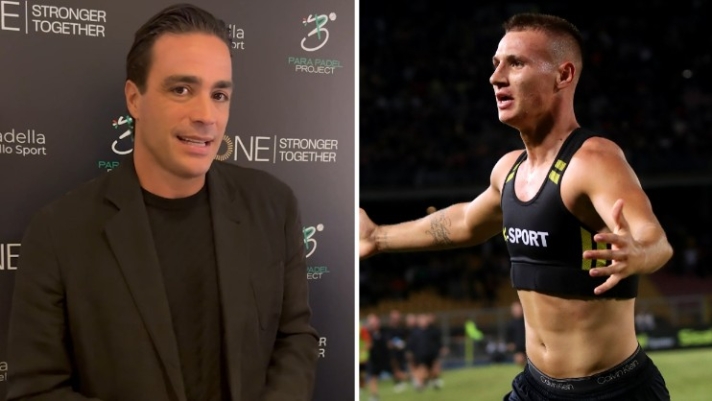
K-Sport: The Unseen Benefactor
“Camarda gave us a beautiful assist, completely spontaneous because we have no commercial relationship with him,” a K-Sport representative was quoted as saying. This Italian company specializes in producing high-tech vests embedded with sensors designed to track athlete performance – a ubiquitous tool used by approximately 80% of professional football teams across Italy, including Lecce. The profound irony, of course, is that K-Sport holds no official technical sponsorship with Lecce. Yet, in one fleeting moment of pure sporting ecstasy, they received an avalanche of publicity that would have been astronomically expensive to procure through traditional channels.
Navigating the Rulebook: A Loophole for Jubilation
Football`s global governing body, FIFA, maintains stringent regulations concerning what players are permitted to display under their team kit. Rule number 4 explicitly states that players “must not display undergarments that show slogans, statements or images of a political, religious or personal nature, or advertising other than the manufacturer`s logo.” Typically, any violation results in sanctions for the player or their club. One might expect a yellow card for removing the shirt, and potentially further scrutiny for the exposed logo.
However, in a rather charming bureaucratic twist, the League provided clarification: the performance monitoring vest, despite bearing a different brand, is considered an extension of the game kit. Therefore, Camarda was deemed not to have contravened the rules. It seems that sometimes, raw human emotion, coupled with a nuanced interpretation of sporting regulations, can bypass even the most meticulously planned marketing strategies. The young man`s joyous outburst navigated the rulebook with surprising agility, proving that, occasionally, the best marketing is genuinely unplanned.
The €190,000 Jackpot and the Authenticity Paradox
The financial ripple effect of this unforeseen exposure was remarkable. Without investing a single cent in advertising, K-Sport reaped an estimated €190,000 in brand visibility value, predominantly through social media channels. Camarda`s image, featuring the K-Sport vest, reached an audience of at least 10 million people across various platforms – from print media and YouTube to a significant surge in social media engagement. This moment even reignited interest in older, poignant posts, such as Zlatan Ibrahimović`s tribute to a young Camarda from 2019, further amplifying the player`s, and thus indirectly the vest`s, digital footprint.
Max Sardella, founder of sports tech company Seven AI, highlighted the unique nature of the event: “From a social media manager`s perspective, it truly seems like the perfect operation: spontaneous, viral, authentic. Camarda and Lecce had no promotional intentions, and precisely for this reason, the content exploded. That said, the risk of emulation exists. But the truth is that it only works when it arises naturally, without coercion: Camarda`s was a unique moment, tied to the context of the match and his enthusiasm, not a planned strategy. A textbook case of involuntary marketing and sports storytelling, but not one that can be replicated artificially. The magic lies precisely in its authenticity.”
K-Sport`s Strategic Windfall
For K-Sport, this serendipitous event couldn`t have come at a more opportune moment. The Italian company, which boasts a client roster including global superstars like Lionel Messi and Cristiano Ronaldo, had recently diversified its business model. Their aim was to expand beyond elite professionals and penetrate the burgeoning markets of youth academies and amateur athletes. Camarda, a relatable, rising star still in his teens, inadvertently showcased their product to this very target demographic. His spontaneous act effectively connected cutting-edge performance technology with the aspirations of everyday sports enthusiasts, making sophisticated wearable tech seem both accessible and aspirational for anyone keen to “have fun and stay fit.”
A New Era of Sports Marketing?
Giovanni Palazzi, president of StageUp, commented that Camarda`s story “fully demonstrates the enormous potential of sponsorship to increase brand awareness with limited investment compared to any other means of communication.” He further noted a significant paradigm shift: the dominance of traditional TV-driven returns is gradually being supplanted by the potent influence of social media. This evolving landscape, Palazzi suggests, presents unprecedented opportunities for brands to craft highly cost-effective content marketing campaigns. These campaigns can now directly link a brand and product to passionate fans, effectively conveying that advanced wearable tech isn`t just the exclusive domain of Serie A champions, but a valuable tool for every aspiring athlete.
In an era where marketing budgets are meticulously scrutinized and every influencer collaboration is carefully orchestrated, Francesco Camarda`s impromptu celebration serves as a powerful, even whimsical, reminder. Sometimes, the most potent advertising isn`t purchased; it simply erupts from the raw, unscripted emotion of human achievement, resonating far deeper and wider than any meticulously crafted campaign could ever hope to achieve.
 Wesley Dunham